
Showroom or Runway First? Where an Emerging Designer Should Invest
Designer Development
For an emerging designer, the question is rarely whether a runway or showroom matters. Both can shape visibility, access, credibility, and commercial growth. The more consequential question is sequence: which platform should come first, and which investment will create the strongest foundation for the next stage?
A runway presentation creates a public statement. A showroom creates a pathway to orders, retail relationships, and market validation. The correct decision depends on the label's development, collection readiness, commercial structure, and intended audience.
The first investment is not always the most visible one.
A Decision About Sequence
A runway is designed to communicate vision at scale. It gives a collection a setting, a rhythm, a cast, and a cultural frame. It can introduce an emerging label to editors, stylists, media, influencers, buyers, and industry professionals while establishing a distinct point of view.
A showroom operates differently. It creates time for examination, conversation, and commercial consideration. Buyers can review materials, assess construction, discuss prices and delivery, understand the size range, and determine whether the collection belongs within their retail environment.
Both are valuable. They produce different forms of momentum.
For many early-stage labels, the most durable sequence is:
- Brand and collection clarity
- Buyer-ready materials and market preparation
- Showroom representation or targeted retail development
- Curated runway or presentation
- Continued public relations, editorial, and buyer follow-up
This is not a fixed formula. A designer with strong editorial demand, an established audience, or a highly distinctive collection may be ready for runway earlier. The principle is strategic rather than prescriptive: each platform should arrive when the brand can convert its opportunities into meaningful progression.
What Runway Delivers
Runway is an instrument of positioning. It places the collection inside a carefully directed environment where silhouette, movement, styling, casting, music, architecture, and audience combine into one narrative.
For an emerging label, a well-curated runway presentation can deliver:
- Brand visibility and recognition
- Editorial imagery and fashion-week content
- Relationships with editors, stylists, photographers, and cultural figures
- A stronger visual identity
- Public confirmation of the designer's point of view
- Material for press, social media, lookbooks, and future partnerships
- Access to influential industry and international audiences
The runway's greatest value is not simply the number of people in the room. It is the quality and relevance of the attention. A focused presentation with the right editors, buyers, media partners, and creative professionals can establish a designer within a specific cultural and commercial conversation.
Current fashion coverage continues to demonstrate that emerging designers are entering the international landscape through varied routes, from major fashion weeks and editorial platforms to cultural collaborations and highly visible placements. Vogue Business's emerging designer coverage reflects this broader ecosystem, where runway remains influential but is no longer the only route to recognition.
Runway is therefore most powerful when the collection already has a clear language. The show should reveal a world that the designer has defined, not compensate for one that remains unresolved.
 Emerging designer presenting a refined collection during an intimate runway presentation
What Showroom Delivers
Showroom representation is a commercial and relational platform. It gives the collection a context in which buyers can engage with the product beyond the speed and spectacle of a presentation.
A showroom can support:
- Buyer introductions
- Retail opportunities
- Wholesale conversations
- Product examination and collection review
- Order development
- Pricing and delivery discussions
- Market feedback
- Retail positioning
- Repeat professional contact
- Commercial growth across selected channels
The showroom is especially important when a designer's immediate objective is distribution. A buyer does not only need to see the collection. The buyer needs to understand how the product can perform within a retail environment.
That requires clear line sheets, wholesale terms, delivery information, sizing, production capacity, margins, and a coherent explanation of the collection. It also requires a brand identity that can be communicated efficiently through a digital presence, lookbook, packaging, and direct conversation.
Showroom development is not less creative than runway. It is creative strategy translated into access. The question becomes not only how the collection appears, but where it belongs, who will purchase it, and how the label can maintain quality as demand develops.
For a designer with a strong product foundation but limited retail presence, showroom representation may create more immediate value than a large public presentation.
The Signals That Point Toward Showroom First
A showroom-led sequence is often appropriate when the designer has:
- A cohesive collection with clear commercial potential
- Reliable production and fulfillment capacity
- Defined wholesale and retail pricing
- A completed line sheet and professional lookbook
- Interest from boutiques, retailers, or private clients
- A desire to build distribution in a specific market
- A collection that benefits from fabric, construction, and fit being examined closely
- A need for direct feedback before expanding public visibility
The label does not need to be fully established. It does need to be prepared for professional consideration.
A showroom can also reveal where the collection requires refinement. Buyers may identify a stronger category opportunity, a more relevant price architecture, or a market with greater alignment. This information becomes part of the designer's development, allowing the next presentation or runway moment to be more precise.
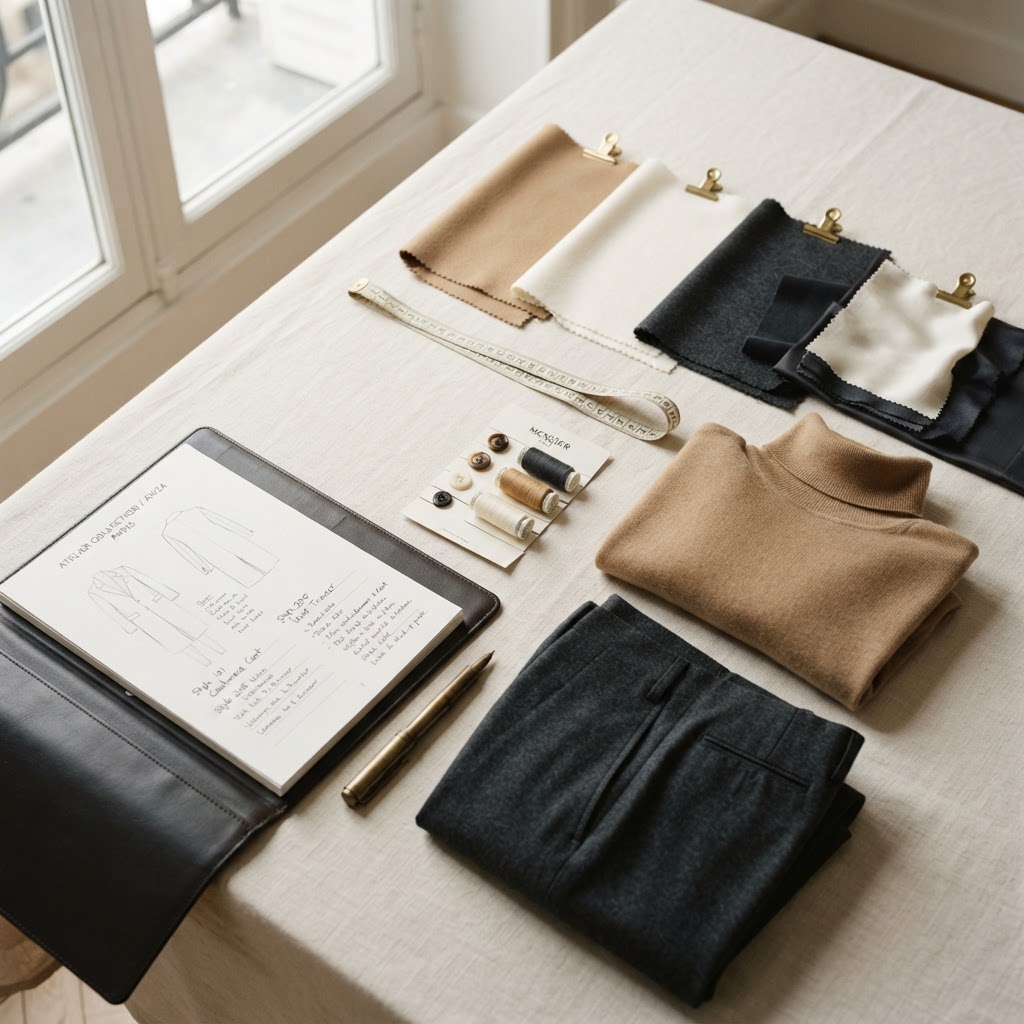 Close editorial detail of garments, fabric swatches, and collection materials prepared for market review
The Signals That Point Toward Runway First
Runway may be the stronger first investment when the designer has:
- A distinctive visual language with editorial strength
- A collection capable of creating a memorable public statement
- A clear reason for entering a particular fashion calendar
- A defined audience of editors, stylists, cultural figures, or international partners
- Professional images, brand materials, and a press narrative already in place
- Product available for immediate inquiry, purchase, or follow-up
- A realistic plan for post-show communication and relationship management
- The resources to protect design quality while funding production and visibility
Runway-first does not mean visibility without structure. The presentation should be supported by a press strategy, guest curation, sample coordination, social content, editorial outreach, and a clear follow-up process.
The designer should know what happens after the final look leaves the room.
A runway without post-show communication can become a temporary image. A runway supported by a considered media and commercial framework can become a durable platform for recognition, partnership, and growth.
When the Two Paths Reinforce Each Other
The strongest development strategy does not treat showroom and runway as opposing choices. It sequences them so that each one strengthens the other.
A showroom can establish buyer relationships before a runway, giving the presentation a more informed commercial direction. The designer enters the show with a clearer understanding of market response, product priorities, and retail positioning.
A runway can then expand the collection's cultural and editorial relevance. Buyers who have already reviewed the garments now encounter them within a stronger visual narrative. Editors and stylists gain context. Retail partners receive imagery and language that can support future placement.
The relationship works in reverse as well. A successful runway can create attention that drives buyers toward a showroom appointment. Editorial coverage can create credibility before a retail conversation. A compelling presentation can help a buyer understand not only what the collection is, but why it matters.
The sequence becomes a connected system:
Visibility creates interest.
Showroom creates access.
Retail creates movement.
Media creates recognition.
Strategic development creates continuity.
The Role of a Connected Creative Partner
The decision between showroom and runway should not be made in isolation. It belongs within a broader framework of designer development, collection positioning, production planning, market access, and public relations.
Posh Group Creative Agency operates across these connected areas through designer development, creative direction, runway production, showroom introductions, retail opportunities, editorial visibility, and strategic industry relationships. Its Front Row platform hand-selects emerging designers based on originality, craftsmanship, visual strength, cultural relevance, presentation quality, and future market potential.
This curatorial approach allows the question to move beyond format. The relevant issue is not simply whether a designer should appear in a showroom or on a runway. It is whether the chosen platform corresponds to the label's current stage and advances the next one.
For some designers, that may mean refining the collection and entering a buyer-focused environment. For others, it may mean developing a runway narrative with international editorial and industry reach. For many, the most considered path is a phased combination of both.
Posh Group's projects bring together runway productions, editorial platforms, international fashion-week opportunities, cultural experiences, and strategic collaborations. This integrated ecosystem gives designers a pathway from discovery and positioning through exposure, relationships, and broader recognition.
A More Durable Investment
The best investment is not necessarily the most impressive format. It is the platform that creates the right form of progress.
Choose showroom first when the priority is buyer access, retail placement, collection feedback, and commercial structure. Choose runway first when the priority is public positioning, editorial visibility, cultural relevance, and a carefully directed introduction to the market.
In both cases, preparation determines value. A runway requires a collection with a point of view and a plan for visibility. A showroom requires a collection with commercial clarity and the ability to support professional orders.
The sequence should reflect the label's actual readiness, not an abstract expectation of what an emerging designer is supposed to do.
A thoughtful pathway may begin quietly, with collection refinement, line sheets, buyer conversations, and selected media relationships. It may then move toward a runway presentation that gives the brand a larger cultural frame. Or it may begin with a tightly curated show that creates the attention necessary to open showroom and retail conversations.
The objective remains the same: to build a label with visibility, access, commercial direction, and lasting influence.
Connect with Posh Group Creative Agency to discuss a considered pathway for designer development, runway presentation, showroom representation, retail opportunity, and international creative growth.
Enter the Studio
Receive selected announcements, designer opportunities, runway updates, editorial stories, and international project news from Posh Group Creative Agency